Kwathu Smart Innovation Farms at AfricaXchange 2026
Deploying Simulation-Led Agriculture Systems in Nairobi
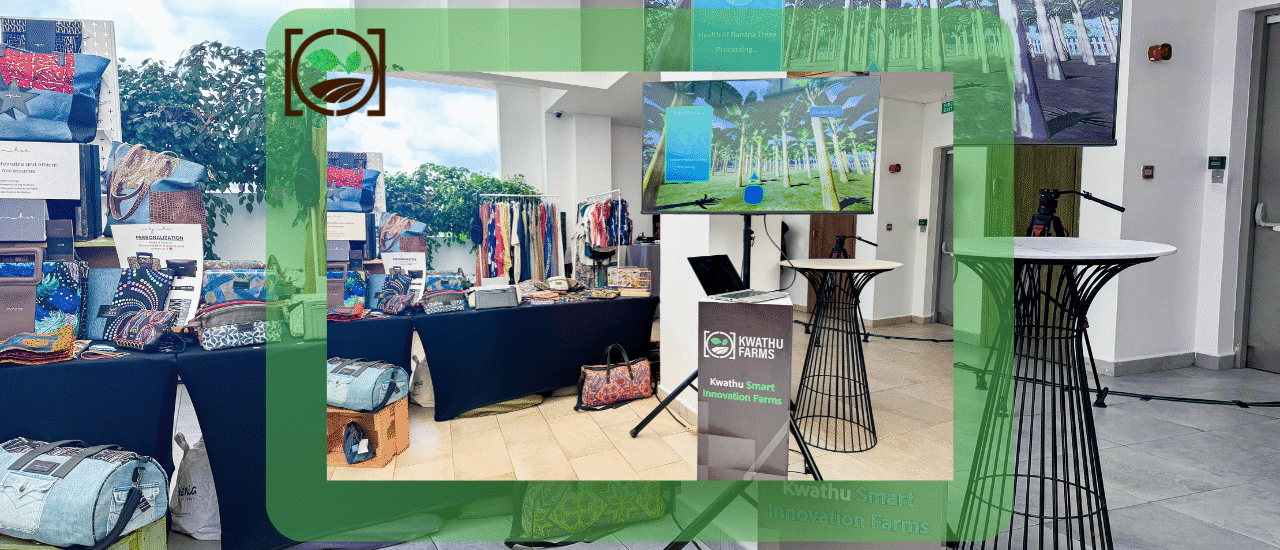
AfricaXchange 2026 in Nairobi marked the first public showcase of Kwathu Smart Innovation Farms [KSIF] on the continent, delivered with the support of ecosystem partners and positioned within a live network of food systems, energy, and community infrastructure actors.
The KSIF installation combined three layers:
- Simulation Interface
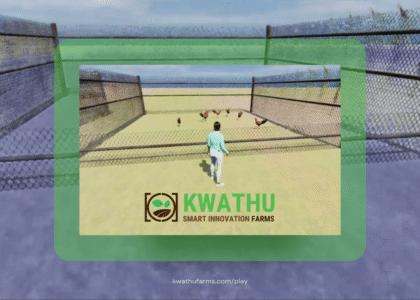
A real-time, interactive farm simulation was presented on-screen. Users navigated a modeled agricultural environment, engaging with:- terrain mappingcrop health indicatorsproduction scenariosenvironmental conditions
- Physical Setup
The booth included a KSIF plinth, screen, and supporting infrastructure. The design was minimal and intentional. It mirrored how KSIF environments are structured:- modularportabledeployable in varied contexts
- Ecosystem
KSIF was presented alongside organizations working across:- food systems and nutritionsolar and energy infrastructureretail and distributionentrepreneurial support
What KSIF Is Building
Kwathu Smart Innovation Farms is structured as an integrated system with three core components:
1. Simulation Layer [Digital Twin + Game Environment]
KSIF is developing a simulation environment that functions both as:
- a digital twin of agricultural systems
- and a game-based interface for interaction and training
This environment allows:
- modeling of farms before physical deployment
- testing of production strategies
- training of operators within controlled scenarios
The game layer introduces:
- progression systems tied to real agricultural outcomes
- reward mechanisms based on performance and efficiency
- user interaction that mirrors real-world decision-making
This creates a bridge between:
- engagement
- learning
- and operational execution
2. Physical Farms [Applied Environments]
KSIF sites are designed as:
- production farms
- training environments
- data-generating systems
They serve as:
- validation layers for simulation outputs
- live environments where models are refined
- infrastructure nodes within broader agricultural systems
3. Coordination Layer [System Integration]
Through integration with Q2 Systems and QTrax, KSIF connects:
- data from the field
- simulation environments
- operational decision-making
This coordination layer enables:
- monitoring across environments
- feedback loops between digital and physical systems
- scalable management of distributed agricultural sites
Why This Work?
Agriculture remains one of the most critical and under-optimized systems globally, particularly in emerging markets. Challenges persist across:
- fragmented production systems
- limited access to real-time data
- inefficiencies in decision-making
- high exposure to environmental variability
KSIF addresses these challenges at the system level by introducing:
- predictive capability through simulation
- operational efficiency through coordination tools
- capacity building through game-based training environments
This approach shifts agriculture toward:
- structured decision-making
- scalable system design
- integrated infrastructure
Market Opportunity
The convergence of:
- digital simulation
- gaming
- and agricultural systems
creates a new category of infrastructure.
KSIF operates at the intersection of:
- agri-tech
- climate adaptation
- workforce development
- and digital infrastructure
The ability to:
- model environments before capital deployment
- train operators at scale
- and coordinate distributed systems
represents a significant opportunity for:
- governments
- development institutions
- private sector operators
AfricaXchange: First Continental Showcase
AfricaXchange 2026 provided the first continental platform for KSIF to:
- demonstrate its simulation environment in a live setting
- position itself within an ecosystem of complementary actors
- engage directly with stakeholders across sectors
The presence of diverse organizations across food, energy, and community systems reinforced the need for coordination across value chains.
KSIF’s role within this landscape is to:
- connect systems
- structure decision-making
- enable scalable deployment
What Comes Next
The focus now shifts from demonstration to execution.
Over the next phase, KSIF will:
- expand physical farm deployments
- advance simulation capabilities and user interaction systems
- integrate reward mechanisms tied to real-world outcomes
- strengthen partnerships across agriculture, technology, and public institutions
The objective is to establish:
- repeatable models
- scalable systems
- measurable outcomes
Investor and Partner Engagement
KSIF is actively engaging with:
- investors interested in infrastructure-led agriculture systems
- partners across energy, logistics, and data systems
- institutions focused on food security and workforce development
Immediate opportunities include:
- pilot site deployment partnerships
- simulation platform collaboration and licensing
- integration with existing agricultural and infrastructure systems
Call to Action
Stakeholders interested in engaging with KSIF can:
- join the KSIF waitlist at kwathufarms.com
- explore pilot partnerships for site deployment
- engage on simulation platform development and integration
Closing
AfricaXchange 2026 marked the transition of KSIF from concept to system demonstration.
The work now is to scale.
Kwathu Smart Innovation Farms is building infrastructure that connects simulation, production, and coordination into a unified system. The objective is clear: to enable agriculture to operate with the same level of precision, predictability, and scalability as other modern industries.
The next phase will determine how quickly this system moves from deployment to adoption.